
Catalysts are the unsung heroes of industrial processes, driving reactions more quickly, efficiently, and economically across sectors including papermaking, pharmaceuticals, food processing, and environmental engineering. While both enzymatic and chemical catalysts share the core function of accelerating chemical reactions without being consumed, they differ dramatically in composition, mode of action, and real-world applications—most notably when it comes to sustainability. For industries pursuing eco-friendly operations, cost-effectiveness, and product quality—such as our focus on papermaking bioenzymes—understanding the advantages of enzymatic catalysts over chemical alternatives is critical. In this blog, we break down the key benefits that position enzymatic catalysts as the sustainable choice for modern, forward-thinking operations.
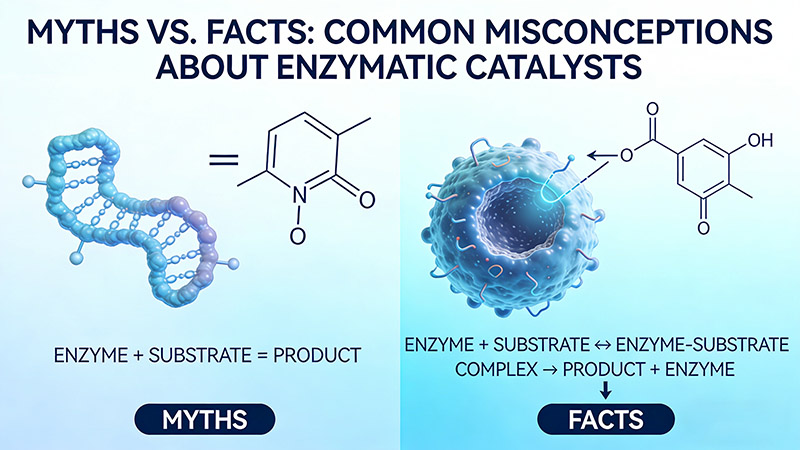
One of the most defining and impactful advantages of enzymatic catalysts is their extraordinary substrate specificity. Enzymes are biological molecules (typically proteins) engineered to act on a single substrate or a narrow range of structurally similar substrates—best visualized as a "lock and key," where only the right substrate fits the enzyme’s active site. This precision stands in stark contrast to chemical catalysts, which often act on multiple substrates and produce unwanted side reactions and by-products. Our flagship Beating Enzyme embodies this specificity perfectly: tailored explicitly for papermaking applications, it delivers targeted, consistent results that chemical alternatives simply cannot match.
For papermakers, this specificity is particularly impactful: our Beating Enzyme targets only the cellulose in pulp fiber cell walls (specifically the P and S1 layers), loosening their structure to reduce beating energy consumption and improve paper strength. In contrast, a chemical catalyst used for the same purpose might react with other pulp components (such as lignin or hemicellulose), producing impurities that compromise paper quality or require additional processing to remove. This precision translates to less waste, higher product purity, and reduced downstream costs—all critical for industrial efficiency.
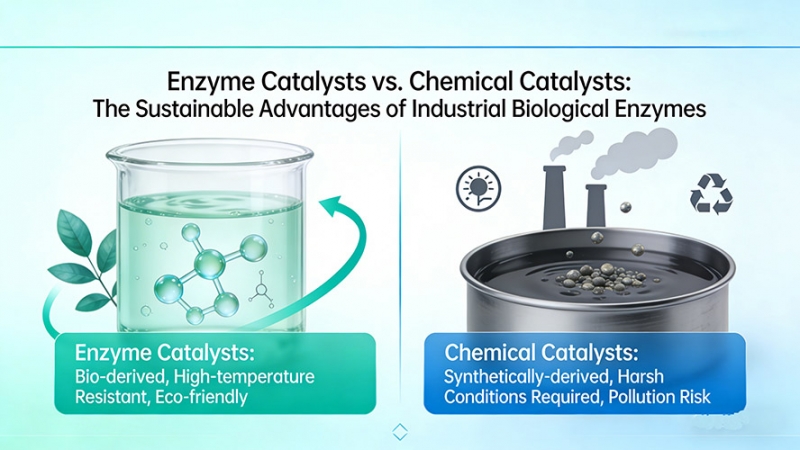
Chemical catalysts often require extreme conditions to function effectively: high temperatures, high pressure, strong acids, or strong alkalis. These harsh conditions not only require substantial energy input—driving up operational costs—but also pose safety hazards to workers and demand specialized, corrosion-resistant equipment, increasing capital expenditure.
Enzymatic catalysts, by contrast, thrive under mild, biologically compatible conditions—eliminating the need for the harsh environments required by chemical alternatives. Most industrial enzymes perform optimally at temperatures between 30–70℃, pH levels between 5.0–10.0, and atmospheric pressure—conditions that are far easier and more cost-effective to maintain. For instance, our Beating Enzyme operates efficiently at 35–65℃ and pH 6.0–10.0, removing the need for expensive heating/cooling systems or harsh chemical additives. This not only reduces energy consumption—a key sustainability goal for many industries—but also minimizes equipment wear, extends machinery lifespan, and creates a safer workplace.
In an era where sustainability is no longer optional but a non-negotiable necessity, enzymatic catalysts offer a clear environmental advantage over chemical alternatives. Enzymes are biodegradable, non-toxic, and derived from renewable biological sources such as bacteria, fungi, or plants. Once their task is complete, they break down naturally into harmless substances, leaving no toxic residues in products or wastewater. Our Beating Enzyme aligns seamlessly with this eco-friendly ethos: it is 100% biodegradable, contains no toxic additives, and helps papermakers reduce their environmental footprint—all while outperforming chemical catalysts in key operational metrics.
Chemical catalysts, on the other hand, often contain non-biodegradable heavy metals (e.g., platinum, palladium, or nickel) or toxic synthetic compounds. These substances can leach into the environment, contaminating soil and water, and require costly disposal processes to meet environmental regulations. For industries aiming to reduce their carbon footprint and achieve green certification standards (e.g., ISO 14001), enzymatic catalysts offer a straightforward way to align operations with sustainable goals—without sacrificing performance.
Enzymatic catalysts are vastly more efficient than chemical catalysts, accelerating reactions at significantly higher rates while requiring far smaller quantities. On a molar basis, enzymes can catalyze reactions 10⁶ to 10¹² times faster than chemical catalysts. This efficiency reduces catalyst dosage requirements, lowering material costs and minimizing the environmental impact of catalyst production and disposal.
Papermaking serves as a clear example of this efficiency: our Beating Enzyme requires only 100–200 grams per ton of absolute dry pulp to deliver significant energy savings and strength improvements. In comparison, a chemical catalyst for the same application would likely demand much higher dosages to achieve comparable results—adding to operational costs and increasing the risk of product contamination.
As mentioned earlier, chemical catalysts often rely on harsh conditions—high pressure, strong acids, or strong alkalis—that corrode and damage industrial equipment over time. This leads to frequent maintenance, equipment replacements, and unplanned downtime—all of which erode profits. For papermakers, this corrosion can be particularly costly for critical equipment like refiner plates and pulping machines, but our Beating Enzyme eliminates this risk entirely through its mild reaction requirements.
Thanks to their mild reaction requirements, enzymes are far gentler on equipment—avoiding the corrosion and component degradation caused by chemical catalysts. This reduces maintenance needs and extends the lifespan of critical assets, such as pulping machines and refiner plates in papermaking. For our clients, this translates to lower capital expenditure on equipment, less unplanned downtime, and more consistent production output.
It’s worth emphasizing that chemical catalysts are not irrelevant—they remain valuable in specific scenarios. For example, in high-temperature industrial processes (e.g., petroleum refining), enzymes would quickly denature and lose activity, making chemical catalysts the more practical choice. They also excel in reactions requiring broad substrate activity (i.e., acting on multiple compounds simultaneously). That said, for most modern manufacturing processes—particularly those prioritizing sustainability, product quality, and cost-efficiency—enzymatic catalysts deliver clear, measurable, and impactful advantages.
The advantages of enzymatic catalysts over chemical catalysts—unmatched specificity, mild reaction conditions, eco-friendliness, higher efficiency, and reduced equipment wear—collectively establish them as the sustainable choice for industries seeking to optimize operations, cut costs, and embrace green practices. At our company, we leverage this biological advantage to develop specialized enzymatic solutions like our Beating Enzyme: a product that encapsulates all these benefits, helping papermakers reduce energy consumption by up to 15%, improve paper strength by 8-12%, and operate more sustainably without compromising productivity or quality.
As industries worldwide shift toward prioritizing green practices and operational efficiency, enzymatic catalysts are emerging as the clear sustainable choice—one that delivers both environmental and business value. For papermakers specifically, our Beating Enzyme is more than just a catalyst: it is a strategic tool that translates the advantages of enzymatic technology into tangible business outcomes, including lower energy bills, reduced maintenance costs, higher-quality paper, and a smaller environmental footprint. Whether you’re in papermaking, food processing, or another sector, switching to enzymatic catalysts—and tailored solutions like our Beating Enzyme—can help you stay ahead of the curve while reducing your environmental impact and boosting your bottom line.
Ready to learn how enzymatic catalysts can transform your operations? Contact our team today to explore our range of industrial bioenzyme solutions tailored to your specific needs.
Philip Wu
Sales Manager
Email: philip@witrustbio.com
Mob/Wechat/Whatsapp: +86 13922484972
© Copyright - | All Right Reserved. Designed By witrustbio.com
 Send Email
 Philip Wu
 Frank68001